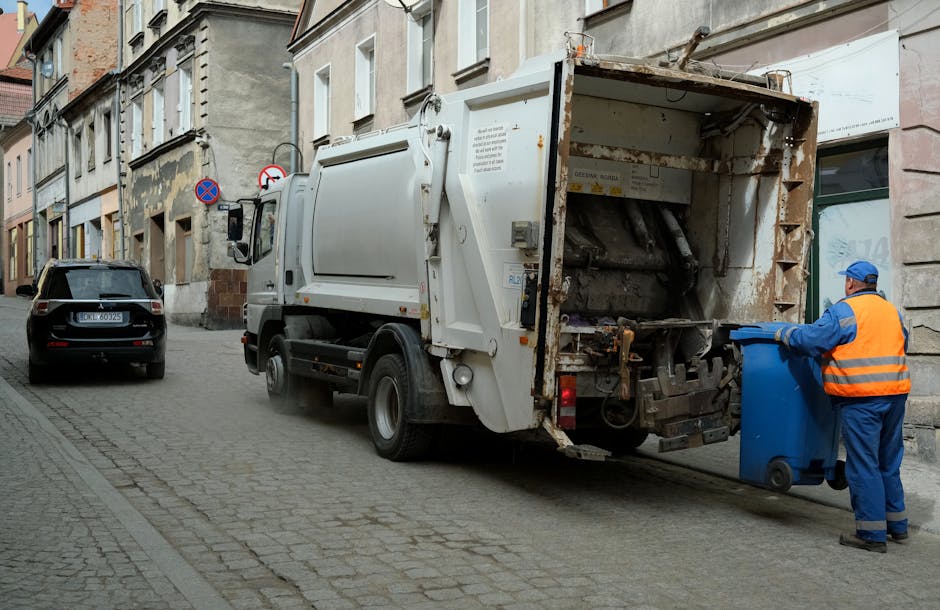
Confused by council collection days in BR7? Rubbish solutions
If you have ever stood at the window on the wrong morning, bin bags lined up neatly, only to realise collection day is not what you thought, you are not alone. Confused by council collection days in BR7? Rubbish solutions is exactly the sort of problem that turns a simple household chore into a small headache. One missed collection can quickly snowball into clutter in the hallway, a smell in the kitchen, or a pile of garden waste waiting for "next week". And let's face it, next week has a habit of becoming next month.
This guide breaks the whole thing down in plain English. You will learn how council collections usually work, where the common confusion comes from, what to do when your waste is piling up, and which rubbish removal options make sense when the usual routine is not enough. If you need a broader service for larger clear-outs, you may also find it useful to look at waste removal options and the related household support pages such as home clearance or house clearance.
Table of Contents
- Why Confused by council collection days in BR7? Rubbish solutions Matters
- How Confused by council collection days in BR7? Rubbish solutions Works
- Key Benefits and Practical Advantages
- Who This Is For and When It Makes Sense
- Step-by-Step Guidance
- Expert Tips for Better Results
- Common Mistakes to Avoid
- Tools, Resources and Recommendations
- Law, Compliance, Standards, or Best Practice
- Options, Methods, or Comparison Table
- Case Study or Real-World Example
- Practical Checklist
- Conclusion
- Frequently Asked Questions
Why Confused by council collection days in BR7? Rubbish solutions Matters
Collection day confusion sounds minor until the practical effects show up. The wrong bin out, the wrong item inside it, or a missed kerbside pickup can leave waste sitting around for days. In a busy BR7 household, that means more than inconvenience. It can create odour, attract pests, and make it harder to keep on top of your weekly routine.
There is also the time cost. People often spend more energy trying to decode collection schedules than they do actually sorting the rubbish. Was it recycling this Thursday or general waste? Does the service change after bank holidays? What about bulky items, garden cuttings, or a broken wardrobe you were hoping the council would take? These are the little details that trip people up.
To be fair, the confusion is understandable. Council services often have different rules for different waste streams, and households do not always keep up with changes. A missed collection or a mistaken assumption can happen to anyone. The key is to have a backup plan, especially if you are in the middle of a declutter, moving house, or dealing with a load of mixed rubbish after a weekend clear-out.
Expert summary: If council collection day rules feel unclear, treat them as your baseline, not your only option. For extra waste, missed bins, or awkward items, a reliable private clearance plan can save time, stress, and another week of waiting.
How Confused by council collection days in BR7? Rubbish solutions Works
Most council collection systems follow a simple pattern: different bins or containers are collected on different days, and each stream has its own rules. The issue is that the pattern is only simple once you already know it. If you have just moved into a property, are new to the area, or have missed a notice, the system can feel oddly opaque.
Usually, confusion comes from one of four places:
- Day changes: collection dates can shift after holidays or due to operational changes.
- Different waste categories: food, garden waste, recycling, and general rubbish may all be handled separately.
- Item restrictions: certain materials, oversized items, and hazardous waste are often excluded.
- Presentation rules: bins may need to be placed out by a specific time, with lids closed and bags not overfilled.
Once those rules become messy or inconvenient, people start looking for rubbish solutions that are more flexible. That might mean booking a one-off clearance, arranging a bulky item collection alternative, or using a proper waste removal service for a load that is simply too much for the weekly bin system.
The practical advantage is obvious. Instead of waiting for the next scheduled pickup, you choose a time that suits you. That is especially helpful if you are clearing out a garage on a Saturday morning, emptying a loft, or trying to get rid of old furniture before guests arrive. The room fills up, the bags sit by the door, and suddenly you want the whole thing gone now. Fair enough.
Key Benefits and Practical Advantages
Using a broader rubbish solution when council collection days are confusing can do more than just remove waste. It gives you control back. That is the real benefit most people are looking for, even if they do not say it out loud.
- Less waiting: you do not need to hold onto bags, boxes, or broken items until the next collection cycle.
- Better for mixed waste: useful when you have more than one type of material to remove.
- Less household disruption: no overflowing bins or cluttered hallways.
- Useful for larger clear-outs: ideal after decluttering, decorating, moving, or garden work.
- More predictable: you know when the waste is going, rather than hoping the council schedule lines up.
Another advantage is scale. Council bins are designed for routine household waste. They are not really built for a shed clear-out, a stack of broken chairs, or that awkward pile of flat-pack packaging you meant to deal with three weekends ago. When the waste load is bigger than the bin, it usually makes sense to switch approach.
If the items are mainly furniture, it can help to compare disposal routes early on. In some cases, furniture clearance is the quickest route. If the pieces are reusable or are being removed as part of a wider clear-out, that can be simpler than trying to fit everything around one council day.
Who This Is For and When It Makes Sense
This topic matters most to people who need waste gone without the friction of waiting for the next scheduled collection. That includes a lot of everyday situations, not just big house moves.
- New residents in BR7: especially if you have not yet learned the local collection pattern.
- Busy families: weekly waste can build up quickly, particularly with packaging and garden debris.
- Landlords and tenants: end-of-tenancy clear-outs often need a faster, cleaner turnaround.
- Homeowners decluttering rooms: lofts, garages, spare rooms, and under-stair cupboards all seem harmless until they are full.
- Small businesses: offices and workspaces often generate mixed waste that does not fit neatly into a domestic bin system.
- Anyone with bulky or awkward items: broken furniture, damaged shelving, old appliances, and construction leftovers.
Sometimes the trigger is small. A neighbour's bin gets missed, yours is full, and suddenly you are juggling bags for a whole week. Other times it is bigger: a renovation, a garden overhaul, or moving out of a flat where every corner reveals another thing you do not want to carry upstairs again.
If you are dealing with a property emptying job, the related services can make a real difference. For example, flat clearance is useful where access is tight, while loft clearance suits those out-of-sight storage spaces that quietly collect half your house. Funny how that happens.
Step-by-Step Guidance
If you are trying to get control of rubbish when council collection days feel unclear, a simple process usually works best. Keep it practical. No drama.
- Identify the waste type. Separate everyday rubbish, recycling, garden waste, furniture, and anything potentially hazardous.
- Check what can wait. If the item is light, safe, and within the usual bin rules, it may be worth holding until the next collection.
- Spot the problem items. Bulky pieces, mixed materials, and awkward objects often need a different solution.
- Measure the load. A few bags is one thing; a full garage or shed is another. Be honest here.
- Choose the right route. Council collection, special pickup, donation, or private waste removal are not interchangeable.
- Book or arrange removal. If waiting will create clutter, stress, or safety issues, line up a faster option.
- Prepare access. Clear hallways, unlock gates, and keep items together so removal is smooth.
A good habit is to group everything in one spot before you decide. People often think they have "just a few bits", then once they start sorting, the pile grows. A broken chair, two bags of old toys, some damp cardboard, a metal frame, and a pile of garden cuttings. Suddenly it is not a few bits at all.
For larger household jobs, a broader clearance route can be easier than trying to fit the whole project around one collection day. Services such as house clearance and home clearance are often worth considering when the waste is part of a wider declutter rather than a single bin issue.
Expert Tips for Better Results
In our experience, the smoothest jobs come down to planning, not force. A few small decisions make the whole thing easier.
- Sort before you move: separating items in place avoids double handling later.
- Keep recyclable materials together: cardboard, metal, and some plastics are easier to manage when grouped correctly.
- Do the awkward items first: if something is hard to carry or dismantle, deal with it before the easy bags.
- Take photos for anything uncertain: especially if you are comparing removal options or asking for a quote.
- Watch access points: tight stairwells, narrow halls, and parked cars can add time if not planned for.
- Think about timing: early morning is often calmer for collections and clearances. Less faff, fewer interruptions.
If you want to reduce waste at source, recycling and reuse should be part of the conversation too. The page on recycling and sustainability is a useful reminder that not everything needs to go straight to disposal. Sometimes the best rubbish solution is the one that avoids unnecessary waste in the first place.
And one more thing: keep a small "go" pile and a small "not sure" pile. It sounds basic, but it stops the entire house from becoming one giant maybe.
Common Mistakes to Avoid
People usually do not make huge errors. It is the small ones that cause trouble.
- Putting the wrong item out on collection day: a bin full of the wrong material may be left behind.
- Overfilling containers: lids that will not close can create issues and delays.
- Leaving waste until the last minute: this is how small jobs become stressful jobs.
- Assuming bulky waste is automatically accepted: it often is not.
- Mixing garden waste with general rubbish: that can make sorting harder later.
- Ignoring access constraints: large items can be impossible to remove quickly if the route is blocked.
Another common mistake is trying to solve a large clearance with patience alone. There is nothing noble about leaning on a stack of bin bags for a week while you wait for the next slot. If the job is bigger than the routine collection system, it is okay to say so and use a more suitable solution.
Tools, Resources and Recommendations
You do not need a complicated toolkit, but a few basics help. Think practical rather than fancy.
- Heavy-duty sacks: useful for mixed household rubbish and garden trimmings.
- Marker labels: handy if you are separating items for reuse, disposal, or recycling.
- Gloves: always sensible for dusty lofts, garages, and old stored items.
- Steps or a trolley: very useful for moving heavier items safely.
- Measuring tape: helps when you are checking whether furniture can be dismantled or carried out intact.
- Phone camera: perfect for documenting the pile before you request a quote or plan access.
On the service side, there are a few pages that help you match the job to the right clearance type. If the waste comes from a workspace, look at office clearance or business waste removal. If the job is outdoors, garden clearance may be the better fit. Matching the service to the problem sounds obvious, but people skip that step more often than you would think.
Law, Compliance, Standards, or Best Practice
When dealing with waste in the UK, the main rule of thumb is straightforward: waste should be handled responsibly, and you should be careful about who removes it. If you are arranging clearance, it is sensible to choose a provider that follows proper waste handling practices, uses suitable insurance, and can explain where waste goes after collection.
For households, the practical best practice is to separate waste as far as possible, avoid putting prohibited items into general bins, and keep anything potentially hazardous out of routine domestic collections. For businesses, the expectations are a little tighter. Mixed commercial waste, paper records, electrical items, and bulky office furniture all need proper handling and sensible documentation.
You may also want reassurance on safety and trust. That is where pages like health and safety policy, insurance and safety, and terms and conditions help set expectations. They do not remove the need for common sense, but they do show how a service approaches responsibility and customer care.
For anything that might be classed as hazardous or unusual, do not guess. Keep it separate and ask for advice before placing it with ordinary waste. That applies to sharp items, chemicals, batteries, and anything with a strong smell or unusual residue. Better safe than sorry, honestly.
Options, Methods, or Comparison Table
Choosing the right method depends on how much waste you have, how quickly it needs to go, and how awkward it is to move. Here is a simple comparison.
| Option | Best for | Pros | Limitations |
|---|---|---|---|
| Council collection | Routine household rubbish and recycling | Convenient, familiar, usually suitable for regular waste | Less flexible, limited item types, fixed schedule |
| Special bulky item arrangement | Large single items or occasional oversized waste | More targeted than a normal bin round | May still involve waiting, restrictions, or limits |
| Private waste removal | Mixed, large, or time-sensitive loads | Flexible timing, can handle bigger clear-outs | Not the cheapest option for tiny jobs |
| Donation or reuse | Good-condition furniture and usable items | Reduces waste, can be more sustainable | Not suitable for damaged or unsafe items |
For many BR7 households, the right answer is a mix of methods. You might reuse some things, recycle others, and arrange a one-off clearance for the awkward remainder. That blended approach is often the neatest way through the mess.
Case Study or Real-World Example
Picture a typical Friday in a BR7 semi. The recycling box is full, the general waste is already heavy, and the garage has become a storage space for "things to sort later". There is an old armchair with sagging springs, a stack of damp cardboard from a recent delivery, a broken curtain rail, and several bags of mixed household clutter. None of it is dramatic on its own. Together, it is a problem.
The first instinct is often to wait for the next council day. But then the bags start narrowing the hallway, the chair gets in the way of the front door, and the garage becomes unusable. That is usually the moment people decide they need a different plan.
In a situation like this, the sensible approach is to split the job. Recycle what can be recycled, separate anything reusable, and use a proper clearance route for the rest. If the main issue is the furniture, furniture disposal can be the cleanest option. If the whole property needs a reset, pairing that with waste removal makes the process much easier to manage.
The important thing is not the exact method. It is getting the space back without making the situation drag on for another week. Once the clutter is gone, the house feels quieter. You hear the room again, which sounds a bit odd, but you know what I mean.
Practical Checklist
Use this checklist before you decide what to do next:
- Have I identified exactly what needs to go?
- Do I know which items can wait for the next council collection?
- Are any items too large, heavy, or awkward for normal bins?
- Have I separated recycling, reusable items, and general waste?
- Is there enough access for removal without blocking doors or paths?
- Do I need a faster option because of smell, clutter, or time pressure?
- Have I checked whether the job is household, garden, furniture, or office-related?
- Do I need to read the service information on about us or pricing and quotes before booking?
- Am I comfortable with the way waste will be handled and removed?
- Have I chosen the simplest route, not just the one I started with?
If most of those answers point toward a one-off clearance rather than a normal collection, that is probably your sign. No drama, just a better fit.
Get a free quote today and see how much you can save.
Conclusion
Confusion around council collection days is frustrating because it takes something ordinary and makes it feel oddly complicated. One wrong assumption, one missed pickup, and suddenly your tidy plan turns into a pile of bags by the door. The good news is that you do not have to keep working around the same schedule if it is not meeting your needs.
The best rubbish solution is the one that fits the job in front of you. For a normal weekly bin, council collection may be enough. For bulky items, mixed waste, larger clear-outs, or moments when you simply need the mess gone quickly, a more flexible clearance route can save time and take the pressure off. Simple as that, really.
If you are feeling stuck, start small: sort the waste, separate the awkward bits, and choose the method that makes the least disruption for your home or business. A calm plan now is worth far more than a stressful scramble later. And once the space is clear, you will feel it immediately.
That small sense of relief? It matters.
Frequently Asked Questions
Why am I confused about council collection days in BR7?
Usually it is because different waste types have different schedules, and those schedules can change after holidays or service updates. If you have recently moved, the rules may simply not be familiar yet.
What should I do if I missed my council collection?
First, check whether the bin was presented correctly and whether the day changed. If the waste cannot wait, consider a one-off rubbish solution so it does not sit around for another week.
Can the council take bulky items like furniture?
Sometimes yes, but often with restrictions, separate arrangements, or waiting times. For larger furniture or mixed loads, a dedicated furniture clearance option may be more practical.
Is private waste removal better than waiting for the council?
It depends on the job. For regular household waste, council collection is often fine. For time-sensitive clear-outs, bulky items, or mixed rubbish, private removal is usually more convenient.
What kind of waste should not go in normal bins?
Hazardous items, sharp materials, batteries, and some electrical waste should be treated separately. If you are unsure, keep the item aside and do not guess.
How do I know whether I need house clearance or waste removal?
If you are clearing a whole property or several rooms, house clearance may be the better fit. If you mainly need a pile of mixed rubbish taken away, general waste removal may be enough.
Can I mix garden waste with household rubbish?
You can store them together temporarily, but it is better to separate them before collection or removal. It makes disposal cleaner and reduces the chance of the wrong material going into the wrong stream.
What if I only have one awkward item?
That is still worth dealing with properly. One item can create just as much hassle as several bags if it blocks access, smells, or will not fit in a normal bin.
How quickly can rubbish be removed if I do not want to wait?
That depends on availability and the size of the job, but a flexible clearance service is usually much quicker than waiting for the next routine collection day.
Are recycling and reuse worth considering before disposal?
Yes, whenever the items are in decent condition or can be separated safely. Reuse and recycling can reduce waste and make the final load smaller, which is good for both the household and the planet.
What is the simplest way to avoid collection-day stress next time?
Keep a running sort of waste through the week, check what goes where before bin day, and do not leave bulky or awkward items until the last minute. Small habits make a big difference, honestly.
Where should I start if my waste situation is already out of hand?
Start by separating what can wait from what cannot. Then look at whether the remaining load is better suited to a specific service such as garden, furniture, loft, or full-property clearance.
Can I get help with larger clear-outs as well as regular rubbish?
Yes. Many jobs need a mix of approaches, and that is perfectly normal. For bigger projects, pages like garage clearance and loft clearance can be especially useful when the clutter has been building for a while.